Background
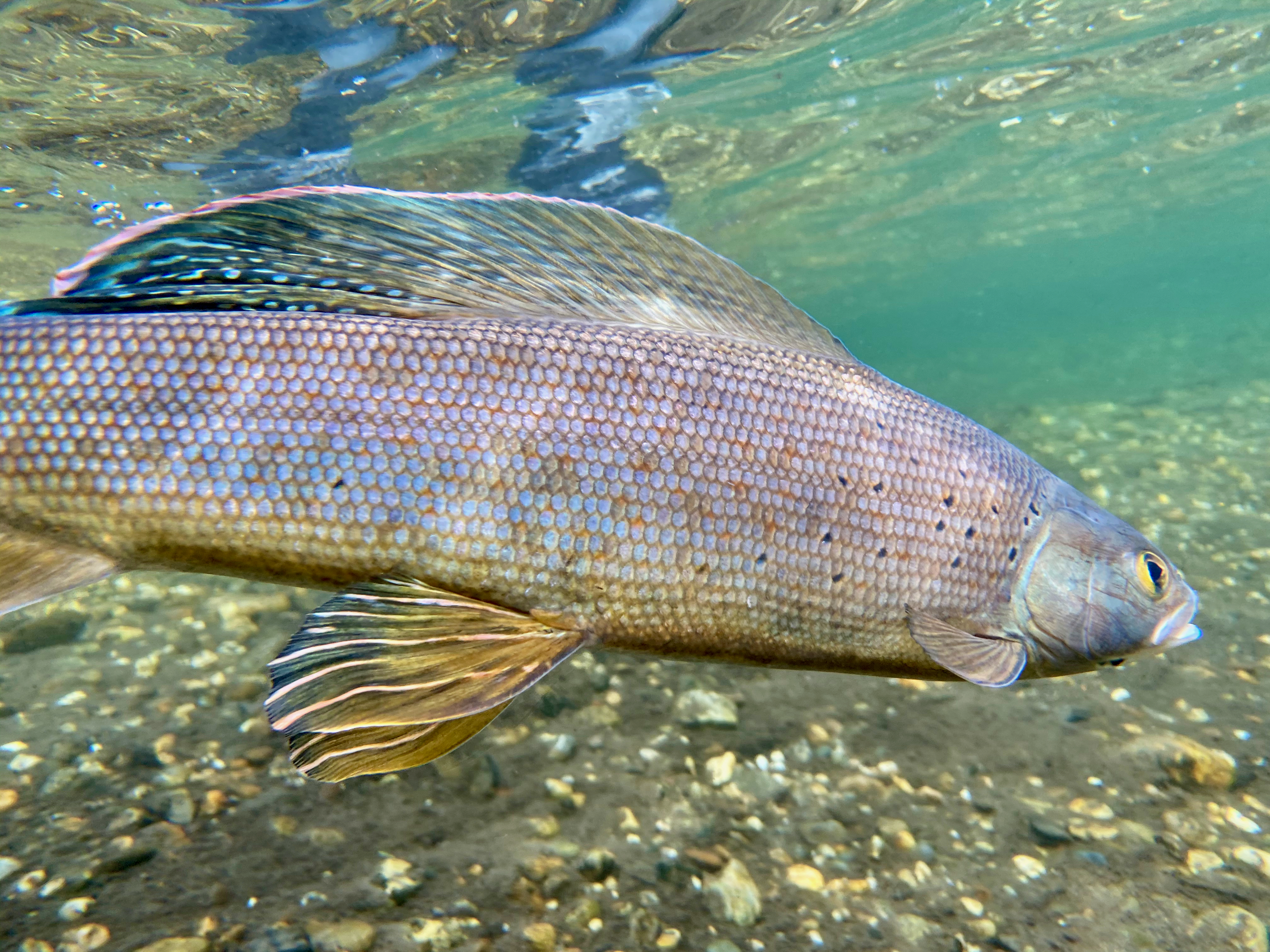
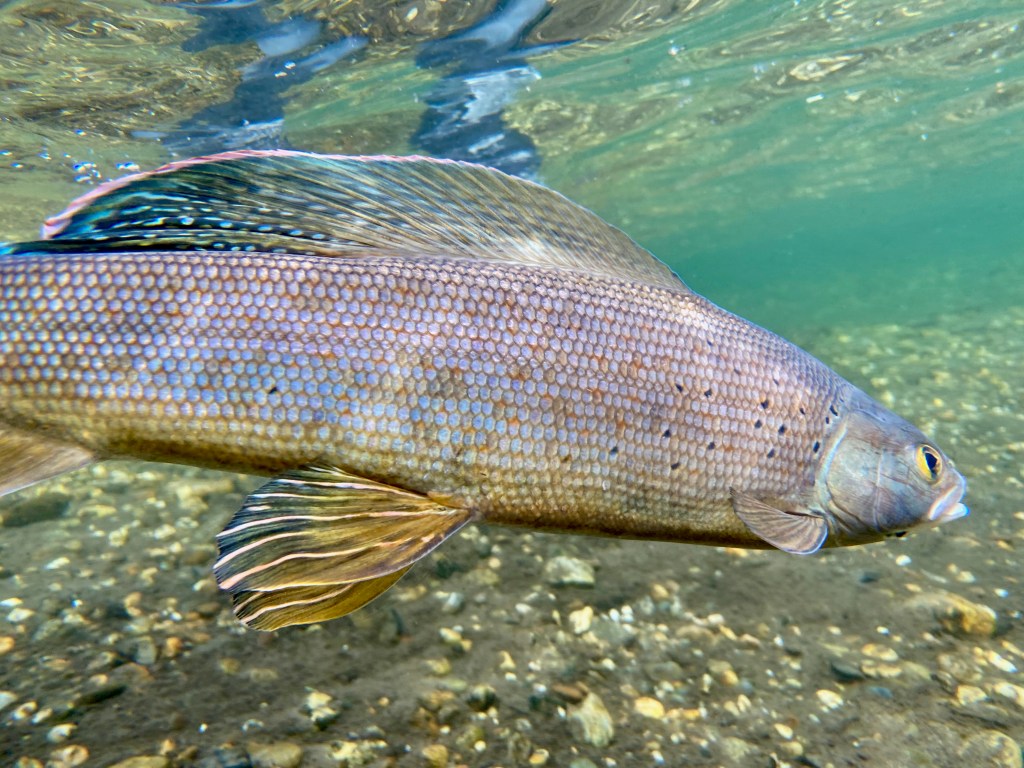
A renewed interest in the reintroduction of Arctic Grayling to historic Michigan home waters requires a deeper understanding of the species. My PhD research seeks to better understand several key aspects of Grayling life history and ecosystem interactions including: water choice and imprinting; predation and competition with young resident stream salmonids (namely, Brook and Brown trout).
Rapid outmigration was a common problem leading to lack of recruitment in early reintroduction attempts. Hatchery-reared Grayling often disappeared shortly after stocking into stream waters in both Michigan and Montana.
What could have contributed to this rapid outmigration? While several factors may have caused this behavior, one of particular interest is unfamiliarity of the water. Rearing in a hatchery and being released into a stream may have resulted in insufficient recognition of the new stream as “home water” for these young Grayling. It was “a whole new world” that did not smell the same as their hatchery home. This unfamiliarity may have led to the outmigration in which the young fish are searching for the smell of familiar water.
Objective
Determine whether young Grayling will show a positive association to their “home water” (familiar water) as compared to unfamiliar water.
Methods
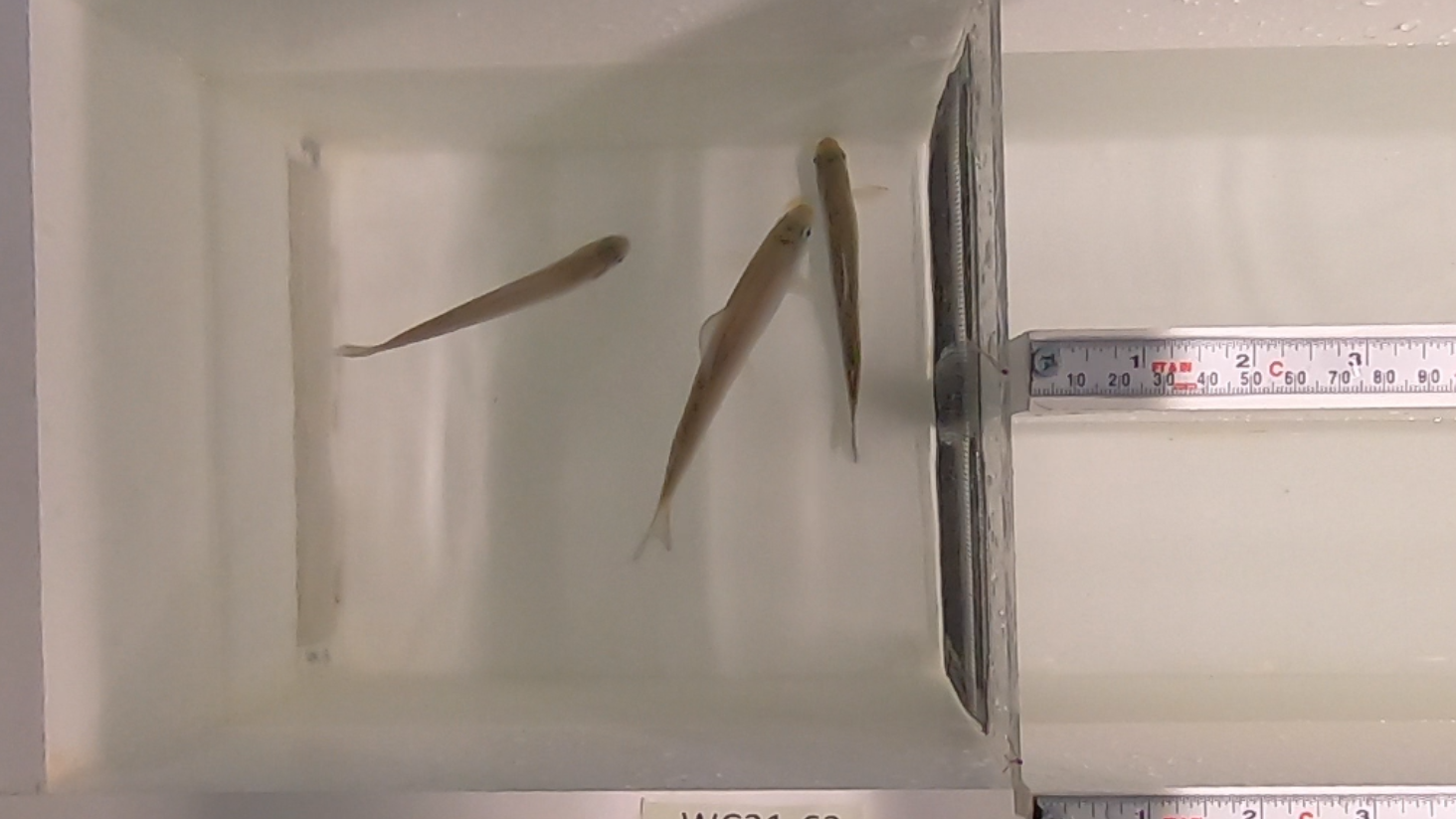
Water choice trials were performed within a Y-type choice flume. Since Grayling actively display shoaling behavior, 3 individuals were tested in the choice arena for each trial. All trials were recorded using a remote camera system controlled via smartphones. After a brief acclimation period, the test water was introduced in one arm of the flume using a rapid drip from a peristaltic pump. Two test waters were analyzed with 80 trials each for a total of 160 water choice trials. Videos were analyzed and location of each fish was recorded every 10 seconds during the “test” phase of the choice trial. Results were analyzed using a statistical software program.
Conclusion
While analysis is still in its infancy, preliminary results show that young Grayling show preference to familiar waters.
Implications
These findings demonstrate the importance to young Grayling rearing in water in which they will be reintroduced. This will establish familiarity at key stages in development and increase the likelihood of a successful reintroduction to their historic home waters.
Future Directions
Additional analysis to examine potential changes in behavior (swimming speed, turning, etc.) is of interest. Imprinting analysis is also an ongoing aspect of the research and will further aid in understanding Arctic Grayling behavior.
 Adventures of a Fish Biologist